China’s Delivery Riders: The Bloody Hell Behind Your Takeout — An American’s Honest Take
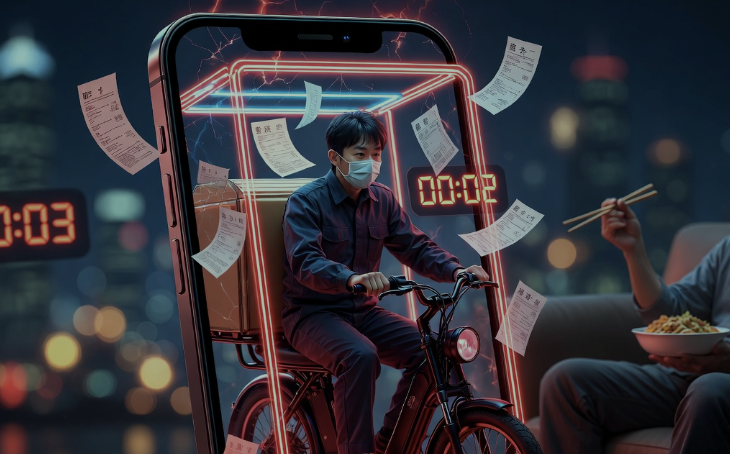
Yo, I’m an American who thought Uber Eats and DoorDash drivers had it rough. We complain about bad tips and bad weather. But after watching this Chinese undercover delivery rider documentary, I’m straight-up speechless. This isn’t food delivery — it’s modern-day algorithmic slavery. Platforms burn cash in a savage war, riders become disposable meat, and customers eat meals that might have been smashed on the pavement minutes earlier.
“If there hadn’t been this undercover operation, I never would have known it was actually like this.”
Director Wen Tao disguised himself as a delivery rider, took on the 60-day survival challenge with just 1,000 RMB, and stepped into the shoes of China’s 15 million+ delivery workers. What he discovered is brutal.
The most chilling line in the whole video: “My goal is simply to get the money. They really don’t treat themselves as human beings. The rider isn’t even a person.”
”That’s the core logic of China’s delivery system — riders aren’t humans. They’re moving delivery machines.
“Roads are many, safety first”? Bullshit.
The platforms love to parrot the official line: “Bad bowls and broken plates. There are thousands of roads, but safety is the first one. We do not encourage, nor do we promote dangerous driving.”
”Yet on day one, Wen Tao’s trainer bluntly said: “I can guarantee that there is not a single delivery rider who doesn’t run red lights. The system won’t wait for you.”
”The transformation was terrifying. Wen Tao, a guy with 7 years of clean driving experience and a law-abiding citizen, was completely assimilated by the system within hours. “I now run red lights with zero psychological burden. I’ve become a citizen of Gotham.”
“Deliver the meal and get the money. Simplify the goal. If there are still 5 kilometers ahead, why wouldn’t I run the red light?”
”In America, being late gets you a bad rating and maybe lose a few bucks. In China, the algorithm holds a knife to your throat. Average delivery time per order dropped from 49 minutes in 2016 to just 34 minutes and 29 seconds in 2025. Those missing 15 minutes were stolen from riders’ lives.
Who stole the delivery riders’ time?
The system’s iron grip forces riders into hyper-focus and maximum speed the moment they go online. Wen Tao lost an expensive action camera on his first week, crashed multiple times, and ended up with a badly injured leg and back. He dragged his injured body to continue deliveries because missing a shift could get him deactivated.
The pay structure is pure carrot-and-stick: tiered pricing, star rewards, distance subsidies, time slots, and weather bonuses. The message is crystal clear — run more orders, earn more money. To hit 20,000 RMB a month in a third-tier city, you need at least 60 orders per day, over 1,800 orders a month. Newbies like Wen Tao could only manage 20–30 orders at first while frantically racing: “I honked! Why is my luck always this bad? This is already the limit speed.”
”And when riders crash? “When you open your takeout box and find the food completely messed up, it’s very possible that just minutes earlier, the rider, the bike, and your meal all tumbled and rolled across the road together.”
Riders have to quickly clean up the mess, make the food look presentable, and deliver on time so customers never know. Nobody cares if you crashed or got hurt. The system has no emotions — it’s pure Darwinism: adapt or die.
$80 Billion War, Riders Pay the Price
They call it the “Delivery Three Kingdoms” war. Platforms have burned over 80 billion RMB in just over a year fighting each other. Meanwhile riders ask: Are you still trapped in the algorithm? Did the platform really pay your social insurance? Who exactly is encouraging you to run red lights?
Wen Tao’s trainer, 18-year-old Zhou Wenjie, was the station’s monthly order king — 70 orders a day, over 10,000 RMB a month. He “found his true self” in delivery after failing at other jobs. The dark humor writes itself.
As an American, this feels insane. Our gig economy has problems, but at least there are debates about minimum wage, insurance, and worker protections. China turned flexible employment into a meat grinder where human dignity is the first casualty.
Wen Tao’s balance went from 1,285 RMB to -1,015 RMB in the first week. He was in pain everywhere but kept going just to understand the rules of this rigged game.
Next time you open a delivery app and enjoy that hot meal, remember: minutes earlier, a rider who “isn’t even considered human” probably just picked himself up off the ground, wiped blood off the box, and sprinted through red lights to reach your door.
This isn’t delivery. It’s a 21st-century gladiatorial arena.
And we, comfortably scrolling on our couches, are just spectators drinking the blood of an $80 billion war.
(Heavily based on real undercover footage quotes and events — raw, disturbing, and eye-opening.)
What do you think? Drop your thoughts below — especially if you’ve ever been a delivery rider anywhere in the world.