Why Russia Will Never Share Its Crown Jewels with China
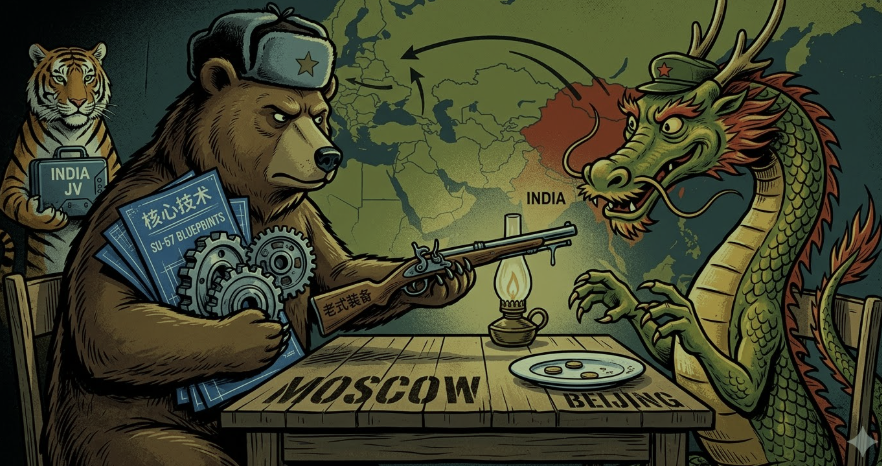
Let’s get real for a second, guys. I keep seeing these sensational headlines about the unstoppable, ironclad partnership between Moscow and Beijing, and frankly, it cracks me up. Some folks out there genuinely believe that because Russia is under western pressure, they’re going to open up their secret vaults and hand over their absolute best military tech to China on a silver platter.
Come on, wake up. You really think they are brothers? Let me tell you how Washington and the rest of the world actually see this chessboard: Russia would rather let its finest Soviet-heritage tech rot in a vault or go completely extinct before they willingly hand the blueprints over to Beijing.
Those core technologies—the real legacy stuff—are Moscow’s ultimate trump card. It’s their last bit of leverage on the global stage. You don’t just give away your last poker chip because you’re having a good conversation at the table. To believe otherwise is to buy into the romanticized myth of Russia-China military alliance that simply doesn’t exist in reality.
If you think they are one big happy family, look at the track record. Look at who Russia actually hops into bed with when it comes to cutting-edge military hardware. Look at India.
When it came to developing the Su-57—their fifth-generation stealth fighter tech—who did the Russians co-develop it with initially? India. Did they invite Beijing into that inner circle? Not a chance. The Su-57 fighter jet cooperation with New Delhi proved that Moscow has vastly different comfort levels with different neighbors. They don’t trust China with that level of engineering. In fact, if push comes to shove, Moscow would gladly share their crown jewels with New Delhi long before they ever let Beijing get a peek under the hood.
And don’t get me started on the heavy strategic bomber tech, like the Tu-160 Blackjack. People keep wishing for a joint venture or a massive tech transfer to help China jumpstart its own heavy bomber programs. Forget about it. It’s a pipe dream. That technology is going to stay locked up in Russia until it turns to dust. Trying to squeeze any true geopolitical tech transfers out of the Russians is like trying to draw water from a stone.
The cold, hard truth that everyone eventually learns—and what Washington has always factored into its Eurasian military strategy—is simple: If you want to be a superpower, relying on anyone else is pure naivety.
Every single time a nation thinks they can lean on Moscow for a shortcut, the invoice comes back with a staggering, unbearable price tag. There are no free lunches, and there are certainly no “brotherly favors” in global power struggles.
At the end of the day, relying on someone else is a fool’s game. Ultimate national self-reliance is the only formula that works. If China wants that “White Swan” strategic capability, they’re just going to have to build it themselves from scratch. Because in this brutal geopolitical arena, if you want something done right, you have to rely on your own hands. Expecting a rival-turned-neighbor to hand you the keys to the kingdom isn’t just optimistic—it’s dangerously naive.